The Art of Motion: Mastering Cyclist Racing on Curved Track in Minima Designs
In the vast landscape of graphic design and visual communication, the ability to convey speed, tension, and dynamic movement often hinges on a single, well-executed image. Among the most evocative subjects for capturing this energy is the cyclist racing on a curved track. When rendered in a Minima style—a design philosophy rooted in reductionism and essentialism—this subject transforms from a mere illustration into a powerful symbol of momentum and focus. The combination of the athlete's posture, the geometry of the velodrome, and the stark contrast of silhouette creates a visual language that speaks universally across cultures and industries.
This exploration delves into the nuances of creating and utilizing such imagery, specifically focusing on the Cyclist Racing on Curbed Track in Minima aesthetic. By stripping away unnecessary details and focusing on clean outlines and balanced shapes, designers can produce assets that are not only visually striking but also highly functional across various media. Whether you are crafting branding elements, designing custom merchandise, or producing digital content, understanding the mechanics of this specific vector style is crucial for achieving professional results.
The Philosophy of Minimalism in Sports Illustration
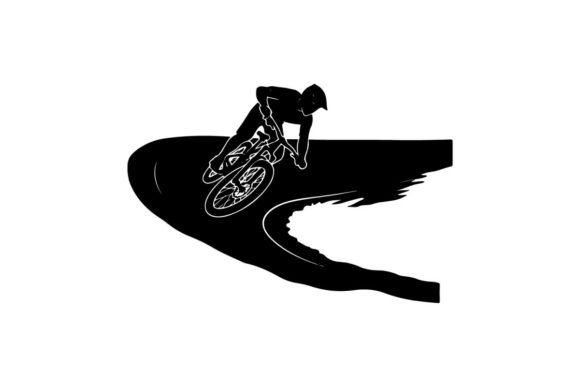
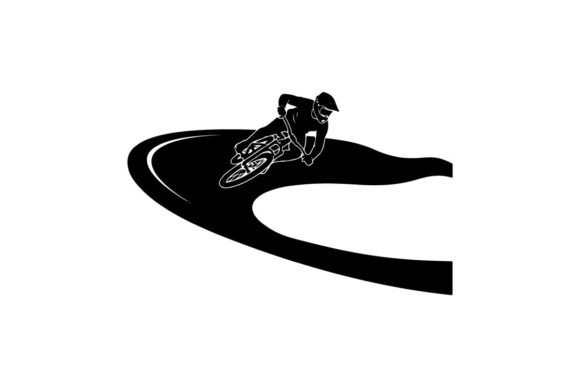
Minimalism in art is not simply about removing elements; it is about refining them until only the essence remains. When applied to sports photography or illustration, particularly cycling, the goal is to capture the feeling of the race rather than the literal texture of the bike or the rider's jersey. A Cyclist Racing on Curved Track in Minima design achieves this by utilizing negative space and bold forms. The curve of the track becomes a leading line, guiding the viewer's eye through the composition, while the silhouette of the cyclist anchors the image with a sense of weight and direction.
This approach aligns perfectly with modern design trends that favor clarity and impact over clutter. In a world saturated with information, a clean, polished design structure allows a message to cut through the noise. The timeless appeal of the silhouette style ensures that these graphics do not become dated quickly. Unlike hyper-realistic renders that may age poorly as technology advances, a minimalist vector retains its relevance because it relies on fundamental geometric principles rather than fleeting stylistic fads.
Visual Dynamics of the Curved Track
The curvature of the track is perhaps the most critical element in this composition. It introduces a sense of centrifugal force and anticipation. In a Minima context, the curve is often exaggerated slightly to enhance the perception of speed. The angle at which the cyclist leans into the turn—the "bank"—is a key indicator of velocity. By simplifying the rider's body into a streamlined shape, the artist emphasizes the aerodynamic necessity of the lean. This creates a visual narrative where the viewer can almost feel the G-force pulling the rider outward.
Furthermore, the interaction between the straight lines of the bicycle frame and the organic curve of the track creates a pleasing visual tension. This contrast is a staple of effective graphic design. It prevents the image from feeling static. Even though the image is a still representation, the implied motion is palpable. This makes the artwork incredibly versatile for use in contexts requiring energy and forward momentum, such as fitness campaigns, logistics branding, or educational materials on physics and motion.
Technical Excellence: The Power of Vector Silhouettes
The medium in which these designs are created is just as important as the concept itself. High-quality vector structures are the backbone of professional clip art. Vectors differ fundamentally from raster images (like JPEGs or PNGs) because they are defined by mathematical equations rather than a grid of pixels. This distinction is vital for anyone looking to scale their designs confidently. A Cyclist Racing on Curved Track in Minima created as a vector can be resized from a tiny icon on a mobile app to a massive billboard without any loss of quality.
The benefits of this scalability are immense for business owners and creators alike. Consider a scenario where a brand needs a logo for a new line of cycling apparel. They need the same asset on a small tag, a large banner, and a website header. With a raster image, resizing often leads to pixelation or blurriness, ruining the professional look. However, an optimized vector path ensures smooth cutting and precise editing at any dimension. The crisp detail and smooth edges remain intact, preserving the integrity of the original design intent.
Workflow Efficiency and Editing Capabilities
Beyond scalability, the editable nature of vector files offers significant advantages in the creative workflow. Designers can easily adjust the stroke weight, modify the color palette, or even alter the shape of the track to fit specific layout requirements. The clean paths of a Premium Vector Silhouette Clip Art file mean that there are no jagged edges or stray pixels to clean up. This streamlines the production process, allowing creators to iterate quickly and efficiently.
For those using cutting machines like Cricut or Silhouette Cameo, the precision of vector paths is non-negotiable. Complex, messy paths can cause cutting errors, resulting in wasted material and time. A professionally designed silhouette with optimized paths ensures reliable performance across popular design software and hardware. This technical reliability translates directly into cost savings and higher quality end products, whether you are producing vinyl decals, fabric transfers, or paper crafts.
Real-World Applications Across Industries
The versatility of the Cyclist Racing on Curved Track in Minima theme extends far beyond sports marketing. Its abstract yet recognizable nature allows it to serve as a metaphor for progress, agility, and strategic maneuvering in various sectors.
- Corporate Branding: Companies in finance, logistics, and consulting often use imagery of racing cyclists to symbolize speed, efficiency, and navigating complex markets. The curved track represents the challenges of the business landscape, while the cyclist represents the company's ability to navigate them successfully.
- Educational Materials: Educators can utilize these silhouettes to explain concepts in physics, such as centripetal force, friction, and aerodynamics. The simplified design removes distractions, allowing students to focus on the underlying scientific principles.
- Event Merchandising: For local cycling clubs or marathons, custom merchandise featuring this motif is highly desirable. T-shirts, water bottles, and posters can feature the design in various colors to match team identities, all while maintaining a sleek, modern look.
- Digital Content and UI: In the digital realm, these icons are perfect for loading screens, progress indicators, or background elements in apps related to health and fitness. The clean lines ensure readability even on small screens.
Each of these applications leverages the core strengths of the design: simplicity, versatility, and visual appeal. By choosing a silhouette that balances form and function, creators can ensure their projects resonate with their intended audience regardless of the specific industry.
Design Considerations for Maximum Impact
While the potential for this type of artwork is vast, successful implementation requires careful consideration of context and execution. One of the primary considerations is the balance between the figure and the environment. In a Minima style, too much detail in the background can overwhelm the subject. The track should support the cyclist, not compete with them. Often, a simple arc or a gradient wash is sufficient to imply the setting without cluttering the composition.
Color theory also plays a pivotal role. While black and white silhouettes offer a classic, high-contrast look, applying a limited color palette can enhance the mood. For instance, using cool blues and greys might evoke a sense of early morning training, while warm oranges and reds could suggest the intensity of a final sprint. However, the rule of minimalism suggests restraint; introducing too many colors can detract from the clean outline that defines the style.
Adapting to Different Cultural Contexts
Another layer of complexity involves cultural interpretation. While the universal language of sport is widely understood, specific symbols within the design might carry different weights in different regions. A truly global design avoids overly specific cultural markers, relying instead on the pure form of the human body in motion. This universality is one of the greatest strengths of the Cyclist Racing on Curved Track in Minima aesthetic. It transcends language barriers, making it an ideal choice for international campaigns or diverse audiences.
Furthermore, accessibility should never be overlooked. High-contrast silhouettes are generally excellent for users with visual impairments, provided the line weight is sufficient. Ensuring that the design maintains clarity when printed in grayscale or viewed by individuals with color vision deficiencies is a mark of thoughtful, inclusive design. This attention to detail reinforces the professional quality of the work and broadens its reach.
Future Trends in Silhouette Design
As we look toward the future of graphic design, the demand for clean, flexible, and scalable assets continues to grow. The rise of social media platforms that prioritize quick visual consumption favors the immediate impact of minimalist silhouettes. Users scrolling through feeds have milliseconds to engage with an image; a cluttered, complex illustration often fails to register, whereas a strong, simple silhouette captures attention instantly.
Additionally, the integration of augmented reality (AR) and interactive web experiences presents new opportunities for these vector assets. Because vectors are lightweight and mathematically defined, they are easier to manipulate in real-time environments compared to heavy raster files. Imagine a user interacting with a Cyclist Racing on Curved Track in Minima graphic on a website, where the cyclist moves along the track as the user scrolls. The clean structure of the vector makes such animations smooth and performant.
The evolution of printing technology also supports this trend. As large-format printing becomes more accessible to small businesses, the ability to scale a design without quality loss becomes a competitive advantage. The Premium Vector Silhouette Clip Art market is responding to this by offering increasingly sophisticated libraries that cater to both digital and physical applications. Creators who invest in high-quality, versatile assets now will find themselves well-positioned for the design challenges of tomorrow.
Ultimately, the journey of creating and utilizing a Cyclist Racing on Curved Track in Minima design is a testament to the power of simplicity. It reminds us that sometimes, less is indeed more. By focusing on the essential elements of motion, form, and balance, designers can create works that are not only beautiful but also deeply functional. Whether used to inspire athletes, educate students, or define a brand identity, these silhouettes stand as enduring symbols of human potential and the relentless pursuit of speed.